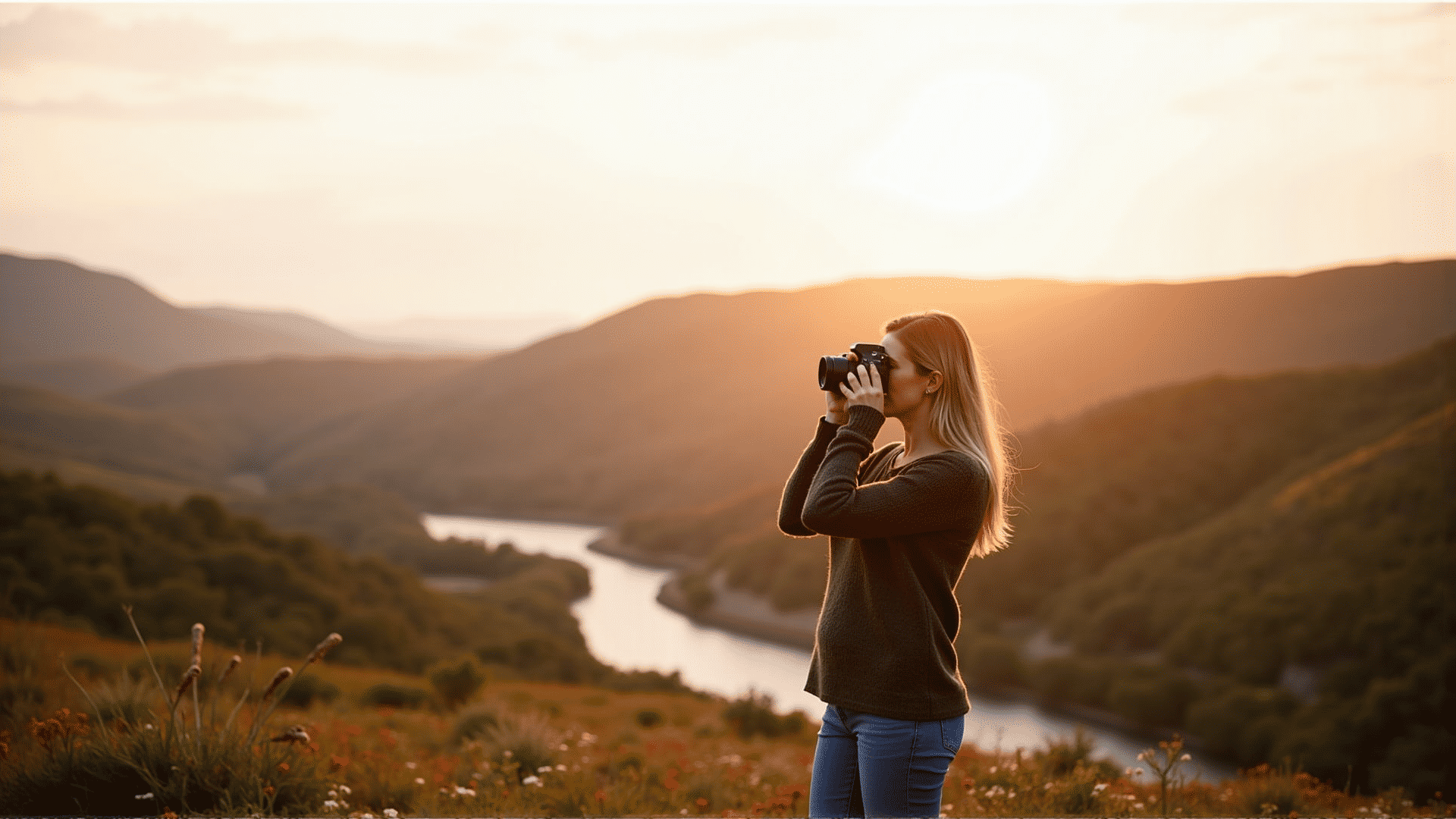
Capturing stunning images is an art form that requires not only an eye for detail but also a solid understanding of various techniques to suit different shooting conditions. Whether you're trying to encapsulate the vibrant hues of a sunset or the dynamic movement of a bustling street, mastering specific methods can significantly enhance your skills.
Understanding Light
Light is one of the most critical aspects to consider. The golden hour—shortly after sunrise or before sunset—offers the soft, warm light ideal for outdoor scenes. To harness this, position your subject so that the light grazes them from an angle, creating depth through shadows and highlights. Alternatively, shooting during midday can result in harsh shadows; using a diffuser can soften these and balance the exposure.
Composition Techniques
Composition forms the bedrock of visually appealing images. The rule of thirds is a fundamental approach where you divide your frame into a 3x3 grid. Placing your main subject at the intersections of these lines can create a more engaging photo. Leading lines can guide the viewer's eye through the image, adding a sense of movement and directing focus.
Capturing Motion
For scenarios involving movement—such as sports or waterfalls—understanding shutter speed is crucial. A fast shutter speed can freeze motion, capturing sharp, clear images of moving subjects. Conversely, a slower shutter speed can create a sense of fluidity or speed; when used with a tripod, it can produce beautiful light trails or silky water effects.
Portraiture Essentials
When capturing portraits, the focus should predominantly be on the eyes, as they convey emotion. A shallow depth of field, achieved by using a wide aperture, can isolate the subject from the background, ensuring the focus remains on the person. Experiment with different angles and perspectives to find the most flattering composition.
Landscape Photography
Landscapes often demand different techniques. Utilize a smaller aperture to ensure both the foreground and background are in focus, enhancing the depth and detail of your scene. A sturdy tripod is essential for stability, especially when using slower shutter speeds in low-light conditions to capture the intricate details of the environment.
Night Shooting
Nighttime photography presents unique challenges and opportunities. Use long exposure techniques to capture more light and reveal details invisible to the naked eye. Experiment with ISO settings to find the right balance between sensitivity and noise. Tripods again prove indispensable here for maintaining sharpness during lengthy exposures.
Creative Use of Filters
Filters can dramatically transform your images. Polarizing filters reduce glare and enhance colors, especially in bright environments. Neutral density filters allow for longer exposure times during the day, facilitating creative effects like smooth waters or dynamic skies.
Mastering Post-Processing
Finally, post-processing is an invaluable step in refining your images. Adjusting highlights, shadows, and color balance can bring your photo to life. Cropping and straightening images can improve composition, while noise reduction can clean up images taken at high ISO settings.
Through understanding and implementing these techniques, you can adapt to a wide array of conditions and creatively express your vision. Practice and experimentation are key; the more you engage with these elements, the more intuitive they will become, ultimately elevating your skill set to new heights.